By industry
How to build a rental marketplace: deposits and insurance
Calendar, deposit, insurance, reviews: how to build a rental marketplace for peer-to-peer equipment, car or boat rentals, and what it really costs to run one.
Contents
Renting is not selling: the item comes back, and everything hinges on that. To build a rental marketplace, whether for cars, boats or outdoor gear, you have to settle three questions that sales never raise: the calendar, the deposit and insurance. This guide takes them in order, with fees read on 27 September 2026 and three examples Marketplace Factory created, each from one sentence: “Clé en main” (“turnkey”), “Cap au large” (“out to sea”) and “Grand Air” (“great outdoors”).
What a rental platform must do
A rental platform is a marketplace in which every listing has a calendar. Six features make the difference:
- A calendar per item: free dates, minimum duration, daily, weekly or seasonal prices.
- A total calculated before the request: number of days times the rate, plus extras (child seat, skipper, delivery). Renters know what they will pay before they write.
- Readable conditions on the listing: deposit amount, licence required, minimum age, mileage included.
- Pick-up and return: place, times, optional delivery, and a photo check-in and check-out report.
- Two-way reviews: the renter rates the item and the owner, the owner rates the renter. That is the memory of trust.
- Messaging tied to the booking, so every exchange stays attached to its dates.
The listing changes with the category:
| Category | What the listing must say | The sensitive point |
|---|---|---|
| Cars | licence held and for how long, minimum age, mileage included, fuel, deposit | insurance |
| Boats | type, capacity, home port, with or without skipper, licence required, minimum duration | weather and cancellation |
| Equipment (camping, tools) | condition, size, weight, instructions, what is included | breakage and wear |
On “Clé en main”, private cars to rent in Bordeaux, Marketplace Factory organises the listing into sections, in French on the site: “The vehicle”, “Behind the wheel”, “Pick-up”, “Rates and deposit”. You read the licence required (for example “full licence, 2 years minimum”), the minimum age, the mileage included, the price per extra kilometre, the deposit and whether comprehensive insurance is included. These fields force owners to answer, before the first request, the questions that make rentals fail.
Private owners, professionals, or both
Private owners bring plentiful supply and low prices, but irregular availability. Professionals (rental companies, sailing centres, sports shops) bring reliable stock, kept hours and their own insurance. Starting with them is often safest: quality is there from day one.
Mixing both is allowed, as long as you say so. In the EU, since the Omnibus Directive (EU) 2019/2161, marketplaces must tell consumers whether each seller is a trader and, if not, that EU consumer rights do not apply. In practice: a “Private” or “Professional” label on every listing, and a help page explaining what it changes. In marketplaces made with Marketplace Factory, each owner declares that status before their page can go live.
One useful point for your terms: vehicle rental booked for a specific date is excluded from the 14-day right of withdrawal, both under Article 16 of the EU Consumer Rights Directive and under regulation 28 of the UK Consumer Contracts Regulations. So your cancellation policy is what applies: write it down and show it on every listing.
Money: payment, deposit, commission
The usual pattern: the renter pays at booking, the platform keeps its commission, the owner receives the rest. How the money moves, owners' accounts and their verification are covered in our guide to marketplace payments with Stripe Connect.
The deposit, without charging
The deposit is usually a card hold: an authorisation on the card, with no charge, lifted on return or captured if there is damage. Its limit is time. At Stripe, an online card authorisation is generally held for seven days (Stripe documentation); after that it expires. Extended authorisations go up to 30 days for some categories, including vehicle rental, but Stripe reserves them for its IC+ pricing.
Three rules follow:
- place the hold the day before pick-up, never at booking;
- for rentals longer than six days, use a deposit that is charged then refunded, or the extended authorisation;
- show the deposit amount on the listing, before the request.
On Marketplace Factory marketplaces, that amount appears on every listing, before the request, and the deposit is settled at pick-up between owner and renter, outside the site.
A worked example
A weekend with a small car from “Clé en main”: 2 days at €45, so €90, a 15% commission and an €800 deposit stated on the listing.
| Line | Amount |
|---|---|
| Paid by the renter | €90.00 |
| Platform commission, 15% | €13.50 |
| Stripe fee, standard European card: 1.5% + €0.25 | €1.60 |
| Marketplace Factory’s share, 2% on Launch | €1.80 |
| Received by the owner | €76.50 |
| Kept by the platform, before Connect fees | €10.10 |
| €800 deposit | separate, never charged without damage |
On Pro, our share drops to 1.5%, or €1.35, and the platform keeps €10.55. Fees read on Stripe’s price list for a euro-area account. Depending on the Connect option, add up to €2 per active owner per month and 0.25% + €0.10 per payout (Stripe Connect pricing). From a US account, the card fee on $90 would be $2.91 (2.9% + 30¢). The right commission rate is discussed in our article on the marketplace business model.
Insurance, the real issue
For a motor vehicle, the baseline is simple: it must carry at least liability cover. In the UK, “third party insurance is the legal minimum” (GOV.UK); other countries have their own compulsory minimum. The difficulty lies elsewhere. A private owner’s policy is written for their own use; renting the car to strangers for money is a different risk, which their insurer must have accepted.
Established platforms settled the question before opening. Getaround writes on its French site that in 2010 it took “a year to obtain a policy specially designed for peer-to-peer car rental” (our translation). Its rentals in France are now insured by AXA (liability, damage to the vehicle, fire, theft), and the owner’s no-claims bonus is not affected by a claim (Getaround’s insurance page, in French, read on 27 September 2026). That is the level your renters will expect.
For a new platform, three realistic routes:
- Start with professional rental companies, who already rent under their own policy. Ask for their certificate and you can open quickly.
- Start with non-motorised equipment (tents, tools, camping gear), where compulsory motor insurance does not come into it. The deposit, check-in and check-out photos and clear breakage rules do most of the work.
- Negotiate a per-rental policy with an insurer or broker, once volume justifies it. Getaround’s story gives the order of magnitude: months, not days.
Tax reporting: what changes for rentals
In the EU, rental of any mode of transport is one of the four activities covered by DAC7, alongside sales of goods, personal services and property rental. The platform operator reports its owners' income, and tells them, no later than 31 January of the following year. Three details matter here:
- No threshold for vehicles. The exclusion for sellers with fewer than 30 sales and no more than €2,000 covers sales of goods only. A private owner who rents out their car twice a year is reported. The UK’s platform reporting rules say the same: the exception does not apply to “rental of transport”.
- Equipment is separate. A tent or a drill is neither a means of transport nor immovable property: as the four activities are defined, equipment rental does not appear among them. This is our reading of the texts; have it confirmed if your platform mixes vehicles and equipment.
- A pure listing site is not a “platform”. DAC7 excludes software that only lets users list or advertise, without any further intervention. As soon as you organise the booking, let alone the payment, assume DAC7 applies.
In the US, payment platforms file Form 1099-K for owners who receive more than $20,000 in more than 200 transactions (IRS). The rest of the framework (DSA, GDPR, terms) is common to all marketplaces: see marketplace legal requirements in the EU.
Three examples, three ways to rent
Marketplace Factory created these marketplaces, each from a single sentence, in a few minutes. They are demos, not customer sites, and they are in French.
- Clé en main: “Private cars to rent near you, in Bordeaux”. Functional style, listings in sections. The key point: insurance, so owners are picked one by one.
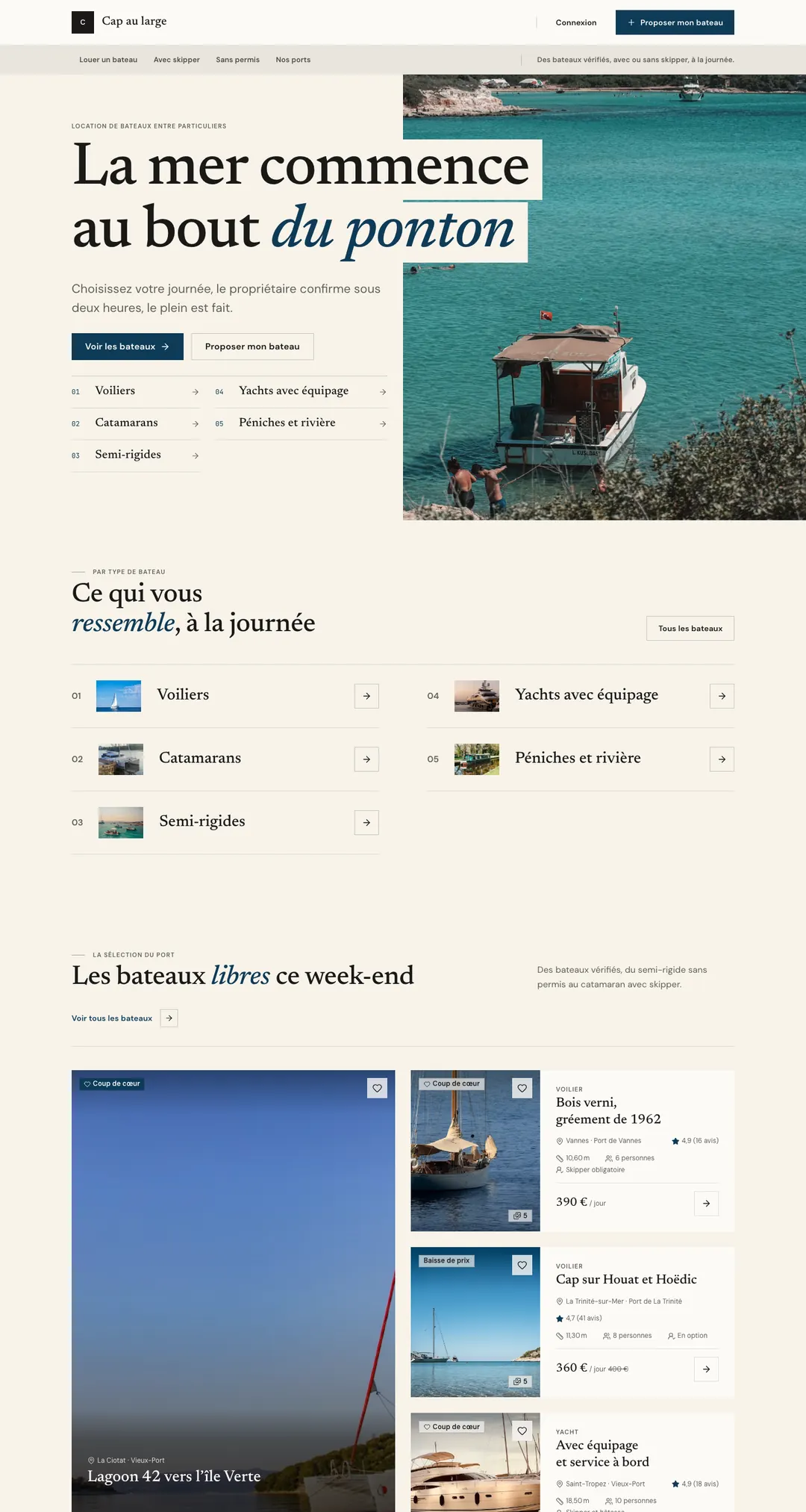
- Cap au large: “Sailing boats and motorboats to rent by the day, with or without a skipper”. Editorial style, with a “Boats with a skipper” section. The key point: weather cancellations, written down clearly.
- Grand Air: “Outdoor gear to rent between enthusiasts, bold style”. Raw style, many low-priced listings. The key point: pick-up and return photos.
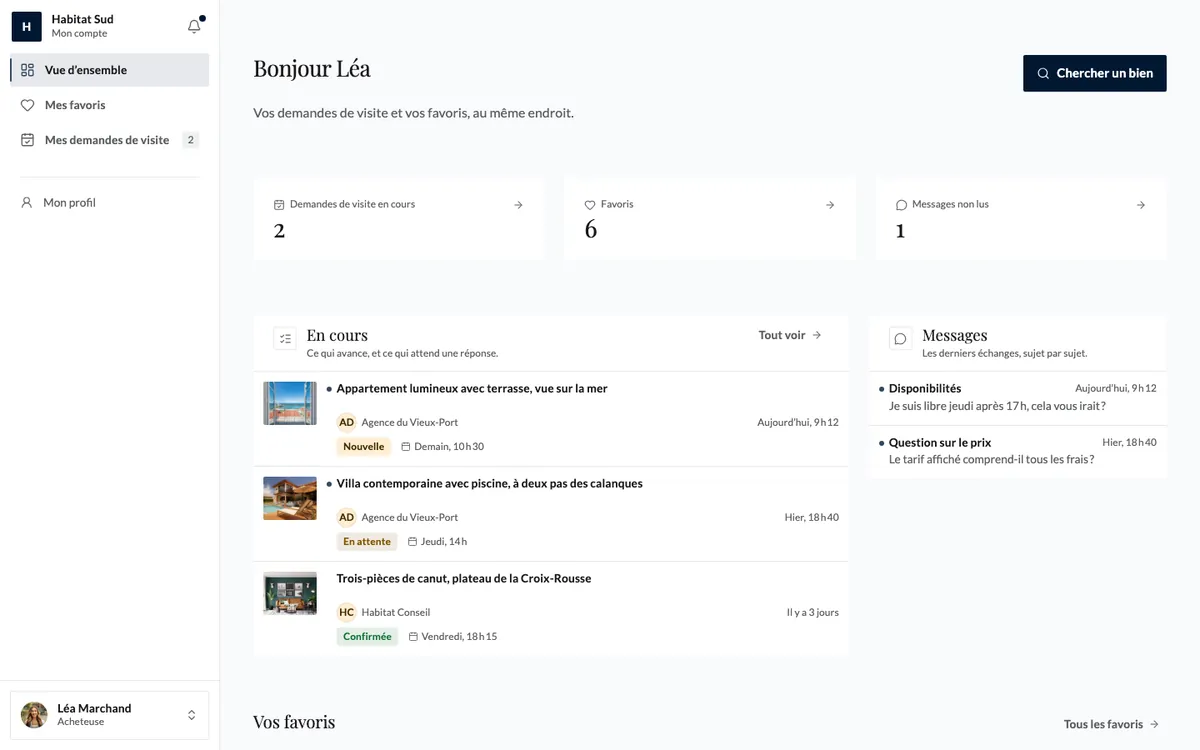
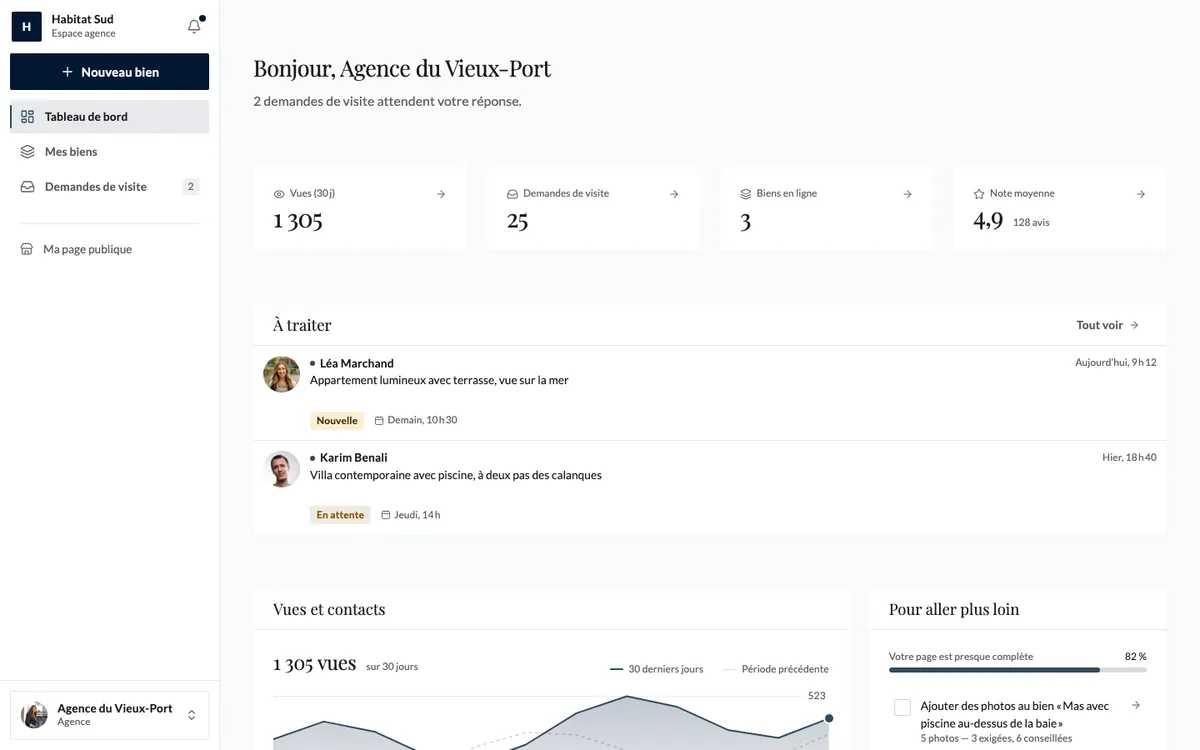
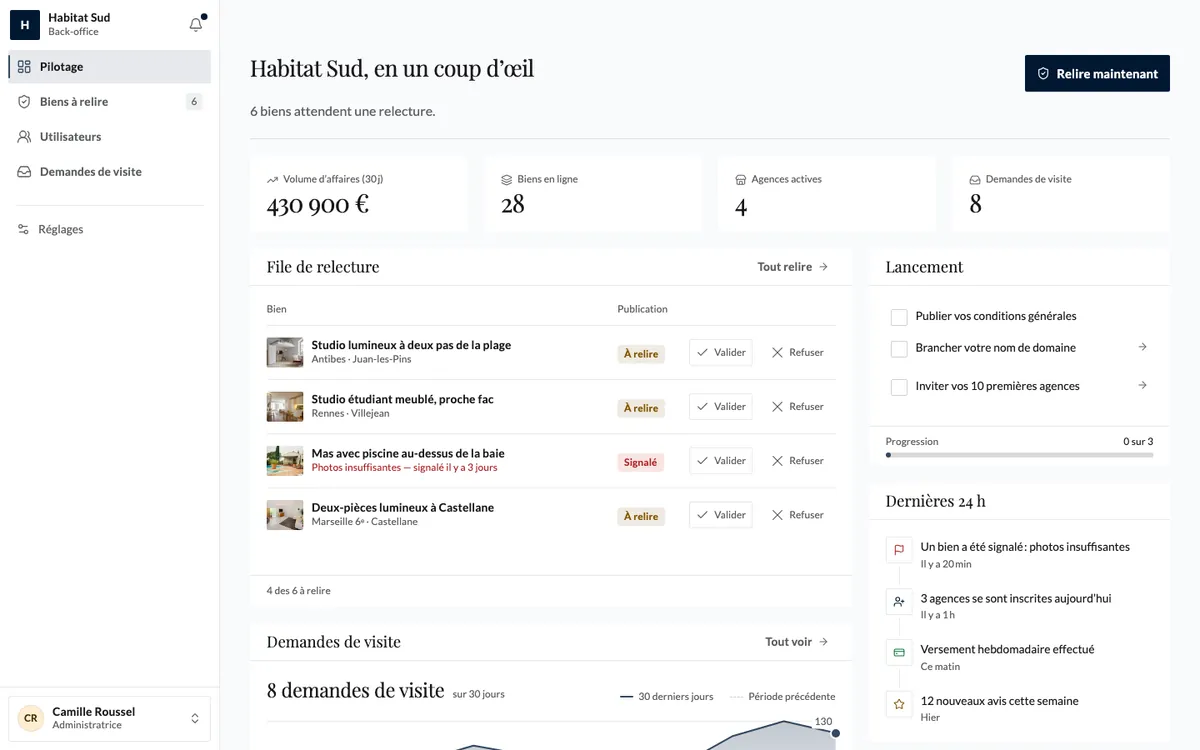
All three can be browsed in the examples gallery, with their four spaces: public site, buyer account, seller space (the owners') and back office.
Budget and launch timeline
| Step | Marketplace Factory plan, excl. VAT | What you get |
|---|---|---|
| Try | Studio, €0 | complete proposals in a few minutes, edits, private preview |
| Open | Launch, €79 a month + 2% of rentals paid online | live site on name.marketplacefactory.app, calendar and date requests, online payment on your Stripe account, your commission, owners paid out, deposit amount on every listing, reviews |
| Become a brand | Pro, €199 a month + 1.5% | everything in Launch, plus up to 3 domain names, your emails sent from your domain, connectors, several admins |
Our share applies only to rentals paid online on your site, refunds deducted: not to requests settled directly, nor to the deposit. Stripe charges its own fees on top, on its price list. What you pay in total per month, excluding VAT and Stripe fees:
| Rentals paid online per month | €1,000 | €5,000 | €10,000 |
|---|---|---|---|
| Launch, €79 + 2% | €99 | €179 | €279 |
| Pro, €199 + 1.5% | €214 | €274 | €349 |
| Dedicated, from €990 + 1% | €1,000 | €1,040 | €1,090 |
Above about €24,000 of rentals a month, Pro costs less than Launch. During the beta, you try everything without paying a thing: payments run in test mode. Plans are on the pricing page, and the full cost of a platform, subscription included, in the cost to build a marketplace.
A realistic timeline:
- Week 1: write the sentence, pick one of the proposals, edit copy and photos.
- Weeks 2 to 4: recruit twenty owners by hand, in a single city; the method is in the marketplace chicken and egg problem.
- Months 2 and 3: open in request mode, measure owners' acceptance rate and response time.
- Then: switch to online payment once requests arrive every week and insurance is sorted.
The checklist
- One category and one city, no more, at the start.
- On every listing: the deposit, the conditions and the estimated total.
- The “Private” or “Professional” label, visible.
- A written cancellation policy, shown before the request.
- Insurance settled for each type of item.
- The deposit hold placed the day before pick-up.
- Photo check-in and check-out reports.
- Reviews in both directions.
- Owners' tax numbers and addresses, collected for reporting.
- A weekly review: requests, acceptances, disputes.
To place rentals in the whole journey, from idea to first sales, read our guide on how to build a marketplace.
With Marketplace Factory, your rental platform arrives complete from one sentence: a calendar per item, listings that state the deposit and conditions, messaging, reviews, the owners’ space and a back office, online payment from the Launch plan, without a line of code.
Frequently asked questions
How do I handle deposits on a rental marketplace?
Usually with a card hold: the amount is blocked on the renter’s card without being charged, then released on return or captured if there is damage. An online card authorisation generally lasts seven days at Stripe. So place it the day before pick-up, and for longer rentals use a deposit that is charged and then refunded, or an extended authorisation where eligible.
Do I need special insurance for peer-to-peer car rental?
Every motor vehicle needs at least liability cover, but a private owner’s policy is not written for renting to strangers. Established platforms cover each rental with a dedicated policy: Getaround says it took a year to obtain one in France. At the start, work with professional rental companies that are already insured, or with non-motorised equipment.
Is rental income reported to the tax authorities?
For vehicles, yes, in the EU and the UK. Rental of any mode of transport is one of the activities covered by DAC7 and by the UK’s platform reporting rules, without the 30-sales and €2,000 threshold reserved for sales of goods. In the US, payment platforms file Form 1099-K above $20,000 and 200 transactions. Renting out tools or tents is not listed among the DAC7 activities.
Can I launch a rental platform without online payments?
Yes. In request mode, the renter picks dates, the owner accepts or declines, and the two settle payment and deposit directly. With Marketplace Factory, online payment is included from the Launch plan, at €79 a month excluding VAT plus 2% of the rentals paid online: switch it on once requests arrive every week and insurance is sorted, without changing plans.
Sources12
The pages cited in this article, checked on the date given in the text.
- docs.stripe.com/payments/place-a-hold-on-a-payment-method
- docs.stripe.com/payments/extended-authorization
- stripe.com/ie/pricing
- stripe.com/ie/connect/pricing
- gov.uk/vehicle-insurance
- fr.getaround.com/assurance-location-voiture-particulier
- eur-lex.europa.eu/legal-content/EN/TXT/?uri=CELEX:32011L0083
- legislation.gov.uk/uksi/2013/3134/regulation/28
- eur-lex.europa.eu/legal-content/EN/TXT/?uri=CELEX:32019L2161
- eur-lex.europa.eu/legal-content/EN/TXT/?uri=CELEX:32021L0514
- gov.uk/guidance/reporting-rules-for-digital-platforms
- irs.gov/businesses/understanding-your-form-1099-k
These articles are written by the Marketplace Factory team, who build the studio and the marketplaces it generates. How we write