Business model
Marketplace business model: commission or subscription?
Commission, seller subscriptions, featured listings or listing fees: how to choose your marketplace business model and take rate, with worked numbers and fees.
Contents
Choosing a marketplace business model means deciding who pays, how much, and when. A commission on every sale, seller subscriptions, featured listings, service fees: each has its favourite trades, and a wrong choice is expensive, either in sellers who never sign up or in customers who go around the platform. Here is how to decide, with two worked simulations based on marketplaces from the Marketplace Factory gallery and real payment fees read on 27 September 2026.
Five ways to make money
| Model | Who pays | Typical case | Strength | Weakness |
|---|---|---|---|---|
| Commission | the seller, on each sale | rentals, lessons, one-off services | costs nothing until a sale happens | exposed to disintermediation |
| Service fee | the buyer, on top of the price | accommodation bookings | the seller keeps their price | raises the displayed price |
| Subscription | the seller, every month | estate agencies, regular providers | predictable revenue | slows sign-ups at first |
| Listing fee | the seller, per listing | classifieds, jobs | easy to understand | says nothing about value created |
| Featured listings | the seller, to be seen | “featured” ads | adds to other models | requires existing traffic |
The first three are main models; the last two usually come on top. In its guide on how to set pricing in your marketplace, Sharetribe describes the commission as by far the most common model, and probably the most profitable.
Commission: when it works
A commission, or take rate, works when three conditions hold:
- The transaction happens on the platform. The buyer pays online and the platform pays out the seller’s share. Without online payment, you have to bill sellers afterwards, which works badly.
- The basket is large enough for the commission to cover payment fees. On a €10 purchase, the fixed €0.25 of each European card payment already weighs 2.5 points; the 30¢ of a US card, 3 points.
- The platform adds something to every sale: a new customer, a secure payment, insurance, reviews.
How much to take? The same Sharetribe guide, by co-founder Juho Makkonen and updated in June 2024, suggests 10% as a starting point, notes rates from 1.9% at OpenTable to 70% at Shutterstock, and reports an average of 12.4% among its ten largest customers, between 5% and 30%. Its rule, in essence: take as little as you need to stay viable, because a high commission ends up in the price the customer pays.
Seller subscriptions: when they work
A subscription suits sellers who come back every week and work with the same customers: estate agencies, tutors, coaches, everyday tradespeople. It has three advantages: predictable revenue, no incentive to bypass the platform, and simple billing. Its weakness is timing: at launch, you ask sellers to pay for an audience that does not exist yet. That is why many platforms start with a commission, or with a subscription free for a few months, then move to paid subscriptions once the flow of customers is proven.
Featured listings, service fees, hybrids
Service fees are paid by the buyer, on top of the seller’s price. Airbnb shows the split can change over time: on its help page on service fees, read on 27 September 2026, the split-fee structure charges most hosts 3% and guests 14.1% to 16.5% of the booking subtotal, while under the single-fee structure most hosts pay 15.5% and guests pay nothing extra. Airbnb is moving home hosts to the single fee, and once a host switches, they cannot switch back.
Featured listings sell once the platform has traffic: a spot at the top of results is worth money if many people look at them. Mind the law: in the EU, since the consumer Omnibus Directive (EU) 2019/2161, marketplaces must explain the main parameters that determine ranking, and showing search results without clearly disclosing payment “specifically for achieving higher ranking” is banned outright. A paid listing at the top must be recognisable as such.
Hybrids combine: a reduced subscription and a low commission, or a commission on a customer’s first booking only. They fit the trade well but are harder to explain: start simple.
Disintermediation, and how to make it pointless
Disintermediation, or leakage, is when buyer and seller meet on the platform, then deal directly to avoid the commission. It is the number one risk for service marketplaces: after two lessons with the same tutor, the student has their number.
A ban in your terms is not enough. What works is making the platform more useful than a phone call:
- Protected payment: the buyer is refunded if the service does not happen;
- Reviews, which only build up on the seller’s profile for sales made on the platform;
- Scheduling, reminders, invoices: the seller saves time by staying;
- A moderate commission, which sellers accept because it costs them less than it brings;
- A subscription, when the relationship repeats: it removes the very reason to go around you.
Which model for which trade
| Trade | Basket | Frequency | Leakage risk | Suggested model |
|---|---|---|---|---|
| Boat, car and equipment rental | high | low | medium | commission, deposit handled by the platform |
| Lessons and coaching | low to medium | high | high | subscription, or commission on the first booking |
| Home services | medium | regular | high | moderate commission with protected payment, or subscription |
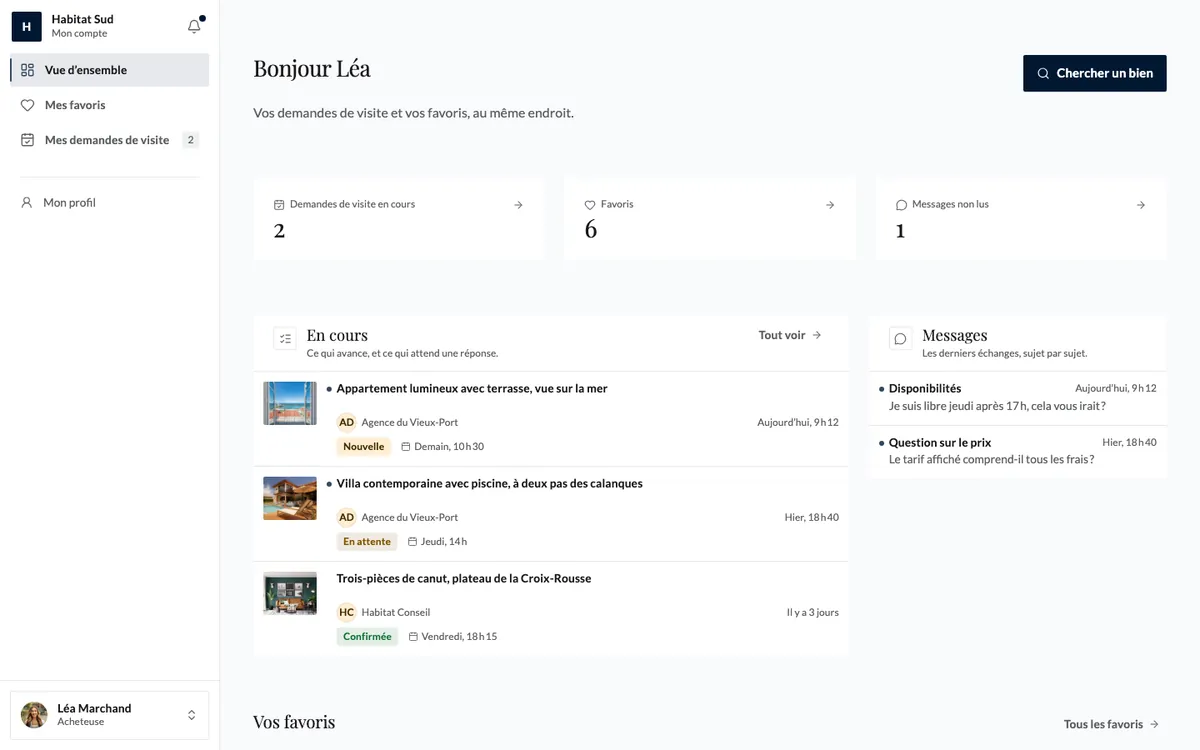
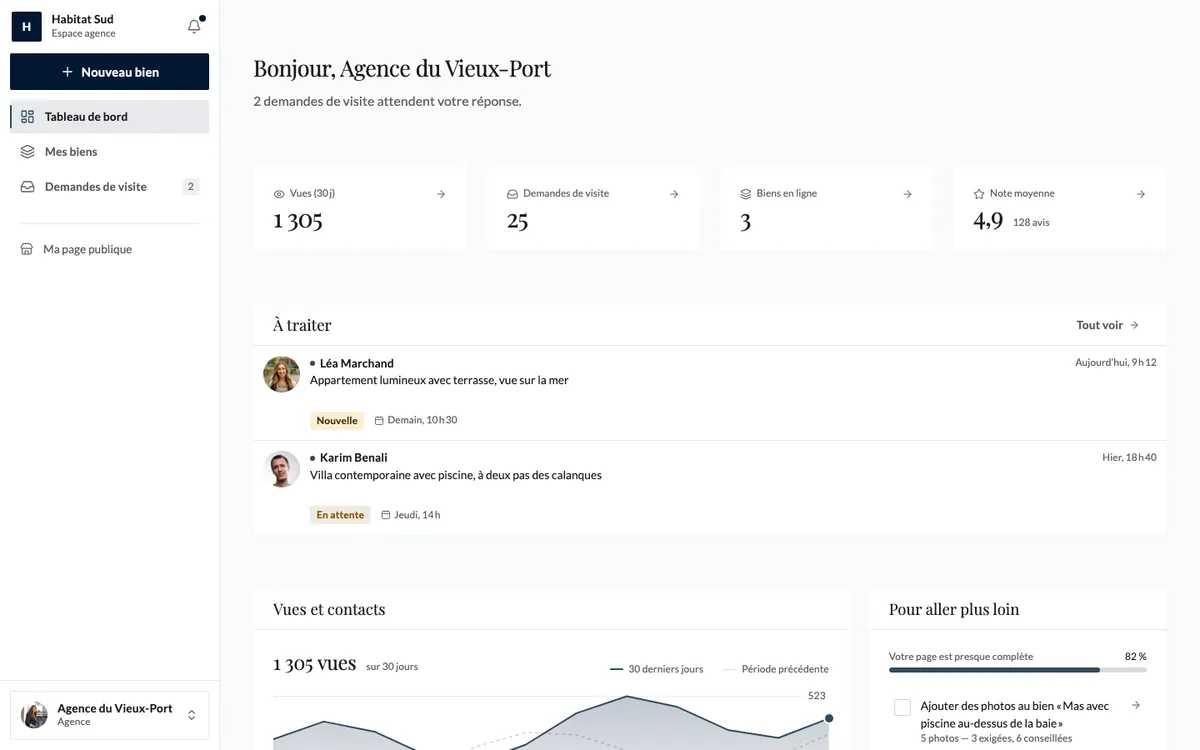
| Property, listing portal | very high, off-platform | low | not applicable | agency subscriptions and featured listings |
| Makers, second-hand | low to medium | medium | low | commission, plus featured listings |
| Jobs, gigs | varies | one-off | medium | per-listing fee or recruiter subscription |
This table is a starting point, not a rule. It comes from three questions: what is the average basket, how often do the same people meet again, and does the transaction happen on the platform?
Working out your break-even point
Break-even is the number of transactions per month from which your marketplace covers its fixed costs. It takes two steps: the net margin per transaction (commission minus payment fees), then fixed costs divided by that margin.
The payment fees used are those of Stripe for a euro-area account, standard European card (1.5% + €0.25), and of Stripe Connect when the platform sets its own pricing (0.25% + €0.10 per payout, €2 per active seller per month). We assume one payout per transaction, a cautious assumption. The software is Marketplace Factory’s Launch plan, €79 a month excluding VAT plus 2% of sales paid online, online payments included: that share is counted per transaction, like card fees. Volumes are assumptions, not results.
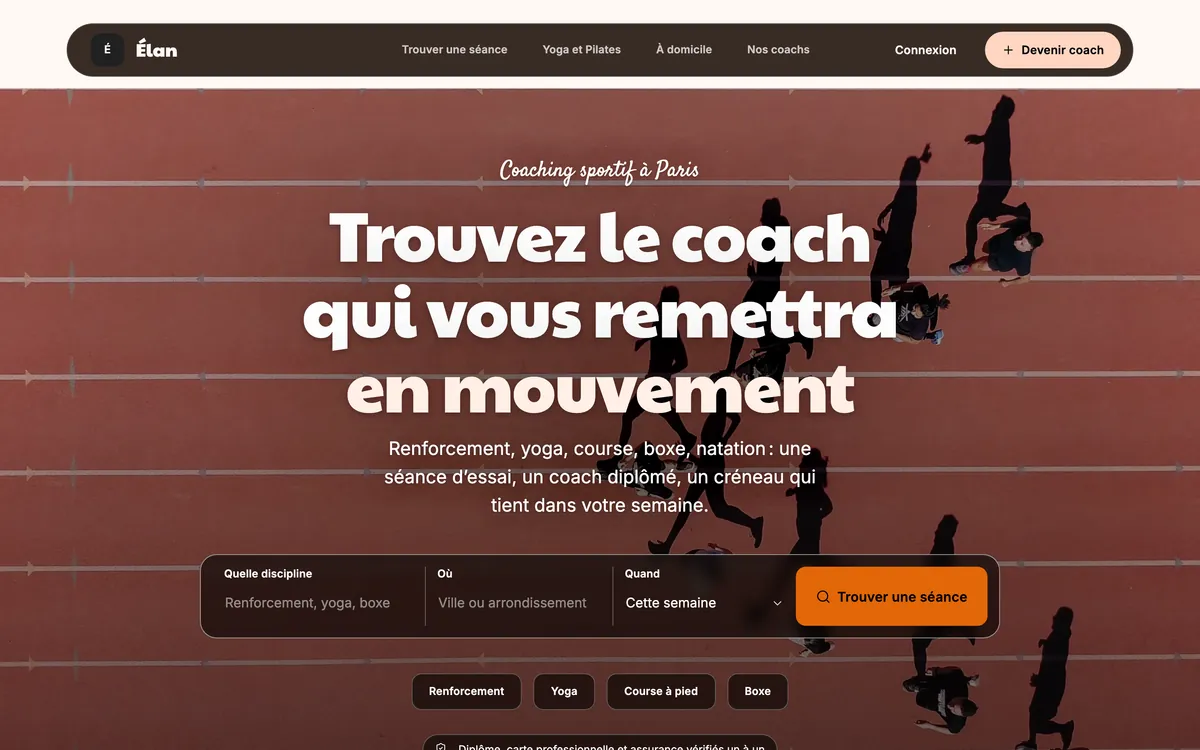
Example 1: “Cap au large”, day boat rentals
Assumptions: a day at €350, a 12% commission, twenty active boat owners in season.
| Line | Amount |
|---|---|
| Commission (12% × €350) | €42.00 |
| Card fee (1.5% × €350 + €0.25) | −€5.50 |
| Payout to owner (0.25% × €308 + €0.10) | −€0.87 |
| Marketplace Factory’s share (2% × €350) | −€7.00 |
| Margin per rental | €28.63 |
| Fixed costs: software €79 + 20 active owners × €2 | €119 a month |
| Break-even | 5 rentals a month |
At 60 rentals a month in summer, €1,598.80 is left each month before your other costs (advertising, insurance, your time). At 15 rentals with 8 active owners in winter, €334.45 is left. Seasonality matters as much as the rate: plan for winter while it is summer.
Example 2: “Savoir-Faire”, lessons taught by craftspeople
Assumptions: a €35 lesson, a 15% commission, forty active teachers.
| Line | Amount |
|---|---|
| Commission (15% × €35) | €5.25 |
| Card fee (1.5% × €35 + €0.25) | −€0.78 |
| Payout to teacher (0.25% × €29.75 + €0.10) | −€0.17 |
| Marketplace Factory’s share (2% × €35) | −€0.70 |
| Margin per lesson | €3.60 |
| Fixed costs: software €79 + 40 active teachers × €2 | €159 a month |
| Break-even | 45 lessons a month |
At 400 lessons a month, €1,281 is left. But if, after a few lessons, half the students book directly, the margin melts. The alternative: a €29 monthly subscription for each of the forty teachers, which is €1,160 of revenue, €1,081 after the software and before the payment fees on those subscriptions, billed separately. Less revenue at first, but no reason to go around you. The right choice depends on what you observe in the first three months.
The same sums with US card pricing
From a US Stripe account (cards: 2.9% + 30¢; Connect: $2 per active account, 0.25% + 25¢ per payout), with the same prices in dollars and the software at about $90 plus 2% of sales, the margin on a $350 boat day falls to $23.53 and break-even rises to 6 rentals. On a $35 lesson, the margin falls to $2.91 and break-even climbs to 59 lessons. Fixed per-payment fees hurt small baskets most.
What your software takes
The question people forget: what the vendor of your software takes. There are three ways to charge: a subscription only, like Kreezalid; a subscription plus a per-transaction meter above a quota, like Sharetribe; a subscription plus a share of sales, like Marketplace Factory. Whatever the formula, count it in your margin, like card fees: that is what both examples above do.
At Marketplace Factory, the share follows your activity. For “Cap au large”, our share is already counted in the margin per rental: €7 on a €350 day. In winter, at 15 rentals and €5,250 of sales, the Launch plan costs €184 excluding VAT in total (€79 + €105). Nothing is due on requests or on what is settled offline, and above €24,000 of online sales a month, Pro costs less than Launch. What the subscription includes: finished proposals from one sentence, the complete marketplace for your trade with its rental flow, online payments from the Launch plan, and not a line of code. Stripe fees come on top in every case. Our article on the cost to build a marketplace compares the software over twelve months, at three levels of activity.
Setting up your model with Marketplace Factory
- From Launch (€79 a month excluding VAT plus 2% of sales paid online), the commission is automatic: you set it anywhere up to 50%, Stripe deducts it from each payment, it stays in your Stripe account, and your sellers receive their share. How it works is explained in our guide to marketplace payments with Stripe Connect. You can also start with requests the seller confirms, paid offline, to validate demand before choosing your model.
- On Pro (€199 a month excluding VAT plus 1.5%), it works the same way, with up to three domain names, your emails sent from your domain, connectors and several admins. Above €24,000 of online sales a month, it also costs less than Launch.
- Featured listings: the back office lets you feature a listing for thirty days; a paid listing must be labelled as such.
- Seller subscriptions, pay-per-listing and paid featuring are coming soon to every Marketplace Factory plan.
- Our share of sales: 2% on Launch, 1.5% on Pro, 1% on Dedicated, on sales paid online only, excluding delivery, net of refunds, invoiced monthly and separately from the subscription. Nothing on requests or on what you collect offline. During the beta, you try everything without paying a thing: payments run in test mode.
If your sellers are businesses and you operate in the EU, keep the P2B Regulation in mind: your terms must tell them how listings are ranked, and any change of terms must be notified at least fifteen days in advance. Next steps: how to build a marketplace, step by step and the chicken and egg problem of your first sellers.
With Marketplace Factory, your model is set in your account: a commission from 0% to 50%, deducted by Stripe from each payment, which you adjust when your numbers call for it, without rebuilding anything.
Frequently asked questions
What take rate should my marketplace charge?
There is no universal rate. Sharetribe suggests 10% as a starting point and reports an average of 12.4% among its ten largest customers, ranging from 5% to 30%. Start from what the seller gains through you, subtract payment fees, and check that the remaining margin covers your fixed costs at the volume you can realistically reach. With Marketplace Factory, you set it anywhere from 0% to 50% in your account, and Stripe deducts it from each payment.
Can I change my business model after launch?
Yes, but lowering a price is easier than raising it: many platforms start a little high, then adjust. If your sellers are businesses and you operate in the EU, the P2B Regulation requires you to notify them on a durable medium at least fifteen days before changed terms take effect. Announce the change, explain it and date it.
How do I stop buyers and sellers from going around the platform?
A clause in your terms is not enough. Using the platform has to pay off for both sides: protected payment, refunds, reviews that stay on the profile, scheduling, invoices. When the same people meet again and again, a seller subscription resists disintermediation better than a commission, because there is nothing left to avoid.
Should sellers pay from day one?
Not necessarily. While your marketplace does not yet bring customers, charging a subscription slows sign-ups. A commission costs the seller nothing until they sell. Many founders give the first sellers a few free months, writing down the end date and the price that will follow.
Sources10
The pages cited in this article, checked on the date given in the text.
- sharetribe.com/academy/how-to-set-pricing-in-your-marketplace
- sharetribe.com/pricing
- kreezalid.com/pricing
- airbnb.com/help/article/1857
- stripe.com/ie/pricing
- stripe.com/ie/connect/pricing
- stripe.com/pricing
- stripe.com/connect/pricing
- eur-lex.europa.eu/legal-content/EN/TXT/?uri=CELEX:32019L2161
- eur-lex.europa.eu/legal-content/EN/TXT/?uri=CELEX:32019R1150
These articles are written by the Marketplace Factory team, who build the studio and the marketplaces it generates. How we write