Growth
Marketplace chicken and egg problem: getting first sellers
No buyers without sellers, no sellers without buyers: practical ways to solve the marketplace chicken and egg problem and win your first sellers in 90 days.

Contents
The marketplace chicken and egg problem is the founder’s first real job, long before technology. Buyers do not come to an empty site, and sellers do not sign up to a site without buyers. It is rarely solved with advertising and almost always with hands-on work on a narrow patch. The Marketplace Factory team, which builds complete marketplaces from a single sentence, brings together here the methods that work, the ones to avoid, the numbers to track and a 90-day plan.
Why start with sellers
The short answer: kick-start the marketplace by bringing in one side first, the one with the most to gain from joining, which is usually supply. It is also the conclusion of a glossary entry on the chicken and egg problem, updated in April 2026, where most of the examples in this article come from. The seller has a financial reason to sign up: they hope for customers. The buyer wants choice; if they find none, they leave and do not return.
So the order becomes: recruit supply, make it presentable, then open to buyers when they will find enough to choose from.
There are exceptions. When demand is rare and concentrated, a few companies posting assignments for example, you start with them. The same glossary cites Florence, a healthcare staffing marketplace, which began as a simple Google Sheet where nursing homes added the shifts they needed to fill.
Shrink the patch
The biggest mistake is opening “everywhere, for everyone”. With fifty sellers spread across a country, each visitor finds two offers near them. With fifty sellers in one city, they find fifty.
Examples abound: GrubHub started with a single Chicago neighbourhood, Kickstarter with the arts community, Curtsy, a dress rental marketplace, with a single sorority. In his essay “Do Things that Don’t Scale” (July 2013), Paul Graham recounts how Airbnb’s founders went door to door in New York to recruit hosts and help them improve their listings, and how about thirty days of that work made the difference between failure and success.
So choose one trade, one city, one audience. You will widen once that first patch works without you.
Ten methods that work
- The list of fifty names. Before anything else, write down fifty possible sellers on your patch, with a way to reach them. Directories, social networks, word of mouth, competitors who already list them: fifty names is a week’s work.
- Calls, then meetings. Call, suggest a coffee, show what their page will look like. Paul Graham describes the “Collison installation” by Stripe’s founders: instead of sending a link, they set the product up on the spot, on the person’s own laptop. Do the same.
- Create the listing with them. Sit next to the seller and fill in their first listing together: photos, price, availability. A complete listing sells; an empty one drives people away.
- Founding-member status. The first ten or twenty get a written perk: featured placement, a badge, a guaranteed rate. They are taking a risk; acknowledge it.
- Waive your commission while you prove it. Three or six months free for the seller, with the end date and the next price written down from the start. Payment fees and, where it applies, the share of sales in your own subscription are still yours to pay: put a figure on the gift before you offer it.
- Bring the first request yourself. A seller who gets a customer in week one becomes your best ambassador. Find those first customers yourself: your network, local associations, nearby businesses.
- Be your own first seller. The founder of PaulCamper, a campervan rental marketplace, started by renting out his own. If you have a real offer, publish it under your name.
- Existing networks. Trade bodies, guilds, associations, schools: one partnership can bring twenty sellers at once.
- The physical world. Fairs, markets, shop windows. The founders of Drive Lah, a peer-to-peer car rental service, found their first users by leaving flyers on windscreens; those of Greenpal, a lawn-care marketplace, by hanging notes on house doors.
- Local pages and proof. One page per city and trade helps sellers and customers find you. Publish early results: a booking, a review, a seller’s testimony.
What to say on the first call
A recruiting call fits in five points. Prepare them, and use the same pitch with everyone.
- Who you are, and why this trade in this city: a true reason beats a start-up speech.
- What the seller gains: customers they would not have had, a page in their name and, if you take a commission, no cost until they sell.
- What you ask of them: twenty minutes to create their listing with you, and quick replies to requests.
- What you do not promise: a number of customers. Promise instead what you will do to find them.
- The next step: a meeting booked, not “I’ll send you a link”.
Three objections come up. “I’m already on a big platform”: nothing stops them being on both, and yours is local. “I don’t have time”: you create the listing together, now. “How much does it cost?”: answer with a price and a date, never “we’ll see”.
Give sellers a reason to stay before buyers arrive
A seller registered on a platform with no customers eventually forgets it. The same glossary describes a remedy: offer sellers a tool that is useful even without buyers, sometimes called “single-player mode”. Freightos first presented itself to freight forwarders as a tool to automate their quotes; Encore, a marketplace for musicians, as a professional network. On your marketplace, the seller’s public page, their calendar or their request management can play that role: they send their own customers there, who discover the other sellers along the way.
What not to do
Publish fake listings or fake reviews. The temptation to fill the site with invented offers to look busy is strong. It is banned. In the EU, the Unfair Commercial Practices Directive treats as misleading any practice that “contains false information”, and since the Omnibus Directive, submitting or commissioning false consumer reviews is banned in all circumstances. In the UK, the CMA’s fake reviews guidance explains the ban on fake and concealed incentivised reviews; in the US, the FTC’s final rule on fake reviews allows civil penalties against knowing violators. And the first buyer who asks for a fictitious offer will never come back.
Hide who is selling. EU consumer law requires marketplaces to tell buyers whether each seller is a trader or not. Your own offers must carry your name.
Open everywhere at once, spend on advertising before you have supply, promise customer volumes you cannot guarantee, or sign up sellers without supporting them: a listing without photos and a seller who never replies do more harm than an empty page.
Numbers to track
No need for a complex dashboard. Every week, track:
| Metric | What it tells you |
|---|---|
| Active sellers | how many have at least one complete, published listing |
| Complete listings | photos, price, availability: the quality of supply |
| Time to first reply | how long a seller takes to answer a request |
| Requests per listing | whether supply finds takers |
| Acceptance rate | the share of requests the seller accepts |
| Sellers with at least one request this month | those with a reason to stay |
| Sellers active again next month | supply retention |
The signal that matters most at the start is simple: do sellers get requests, and do they answer quickly? If so, open wider. If not, do not recruit more sellers: go and find more buyers.
A 90-day plan
| Weeks | Goal | Actions |
|---|---|---|
| 1 and 2 | Choose the patch | one trade, one city; the list of 50 names; your marketplace, created with Marketplace Factory, to show |
| 3 and 4 | The first 10 sellers | calls, meetings, listings created together, founding status |
| 5 and 6 | The first request | your networks, associations, nearby businesses; every seller gets at least one contact |
| 7 and 8 | 25 active sellers | referrals from the first ones, a partnership with a local network |
| 9 and 10 | Open to buyers | local pages, first reviews published, neighbourhood communication |
| 11 and 12 | Measure and decide | the metrics above; widen the patch or fix the offer |
This timeline assumes you spend much of your time on it. The steps matter more than the dates: do not move on until the previous step is reached.
What Marketplace Factory helps with at the start
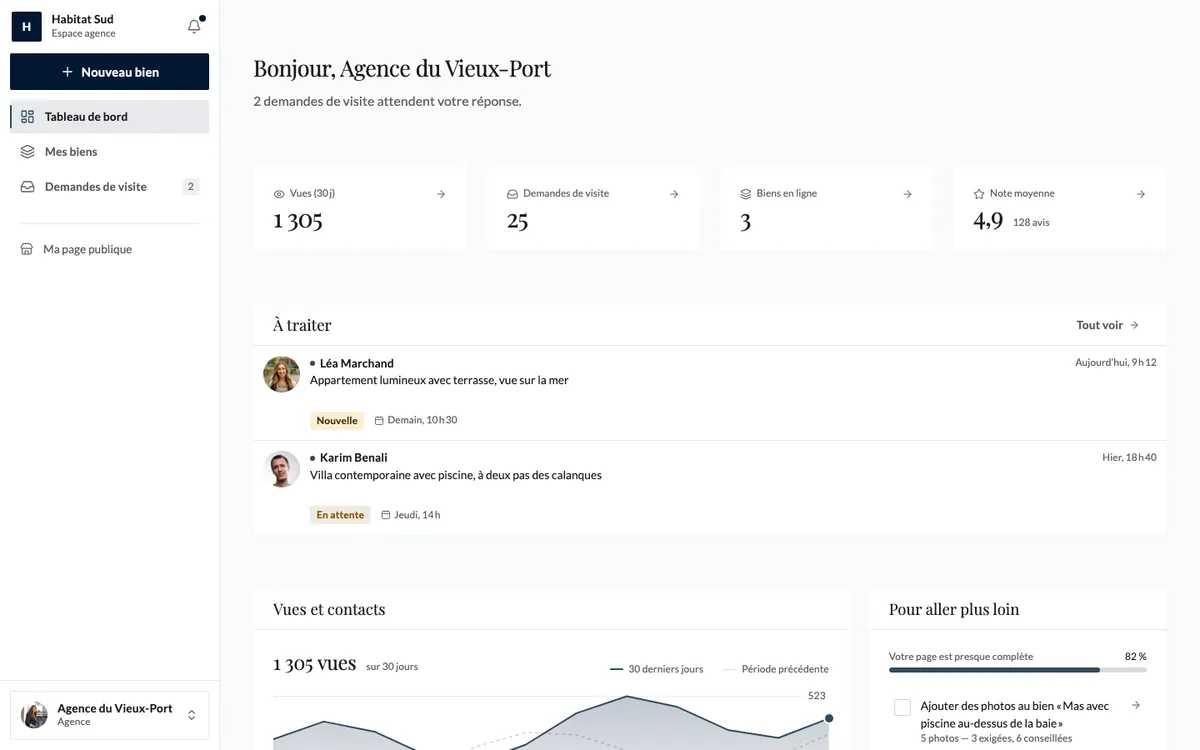
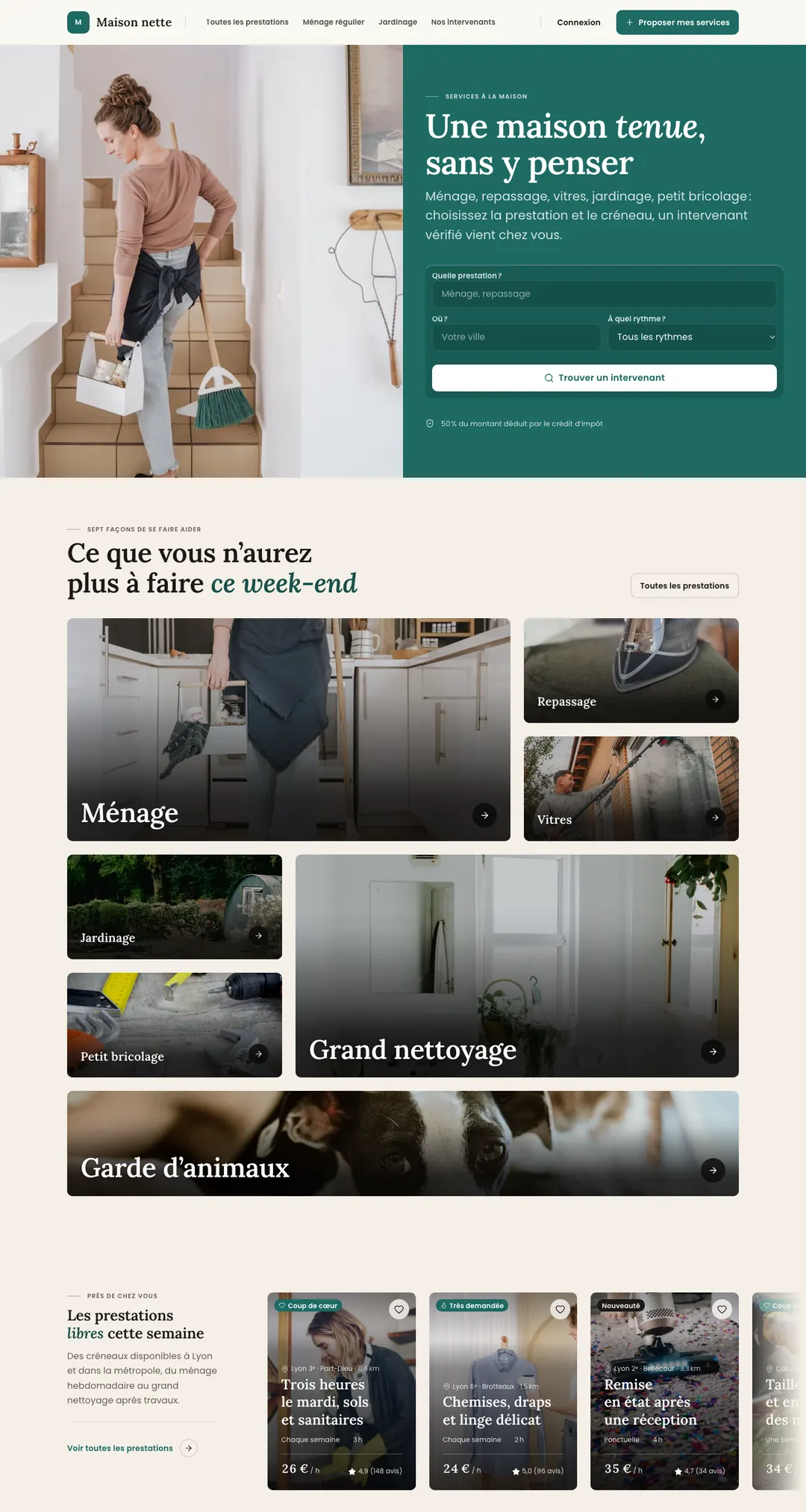
- Show before you recruit. Describe your marketplace in one sentence: complete proposals arrive in a few minutes, without a line of code. Your first idea needs no account; to keep going, a free account is enough, with no card. You walk into the first meeting with a marketplace in your name to show, not just an idea.
- Open right away, payments included. On Launch, at €79 a month excluding VAT plus 2% of sales paid online, your marketplace is live at your-name.marketplacefactory.app, with online payments on your Stripe account. During the beta, you try everything without paying a thing: payments run in test mode. You can also start in request mode, without Stripe: customers send requests that the seller confirms, and your first sellers do not need to open a payment account, which removes a barrier to signing up.
- Reward founders. The back office lets you feature a listing for thirty days.
- Become a brand. On Pro, at €199 a month excluding VAT plus 1.5% of online sales, you move to your own domain (up to three), emails sent from that domain, connectors and several administrators.
Prices and details are on the pricing page. Next: choosing between commission and subscription once your first sellers are in, our guide on how to build a marketplace, and the case of service marketplaces, where recruiting providers decides everything.
With Marketplace Factory, you do not recruit with a promise: you show every seller a working marketplace, in your name, from the very first meeting.
Frequently asked questions
Should I start with sellers or buyers?
Usually with sellers: they have a financial reason to join, and a buyer who lands on an empty site does not come back. The exception is when demand is rare and concentrated, for instance a few companies posting assignments: start with them, then find the providers to answer them.
How many sellers do I need to open my marketplace?
There is no universal number. Our working rule: on the patch you chose, one city and one trade, a visitor should find several credible offers for most searches they make. Twenty active sellers in one neighbourhood beat two hundred scattered across a country: narrow the patch rather than wait for a crowd.
Should I waive the commission for early sellers?
It is often a good idea, as long as you write it down: duration, end date and the price that follows. Early sellers take a risk by joining an empty platform; waiving your commission for a few months, or a founding-member status, acknowledges it. A free period with no end date becomes an entitlement that is hard to take back.
Can I post listings myself at the start?
Yes, if they match real offers: your own, under your name, or those of a seller who agreed and will honour the request. Inventing listings or reviews to fake activity is a misleading practice banned in the EU, the UK and the US, and it destroys the trust of your first buyers.
How do I convince early sellers before my site is live?
Show them the marketplace instead of describing it. With Marketplace Factory, one sentence is enough to receive complete proposals in a few minutes, free and with no account: you walk into the meeting with a marketplace for your trade, in your name, to browse together on screen. A seller commits more readily to something they can see working than to a promise.
Sources6
The pages cited in this article, checked on the date given in the text.
- sharetribe.com/marketplace-glossary/chicken-and-egg-problem
- paulgraham.com/ds.html
- eur-lex.europa.eu/legal-content/EN/TXT/?uri=CELEX:32005L0029
- eur-lex.europa.eu/legal-content/EN/TXT/?uri=CELEX:32019L2161
- gov.uk/government/publications/fake-reviews
- ftc.gov/news-events/news/press-releases/2024/08/federal-trade-commission-announces-final-rule-banning-fake-reviews-testimonials
These articles are written by the Marketplace Factory team, who build the studio and the marketplaces it generates. How we write