By industry
Build a website like Craigslist, for a niche or a city
Build a website like Craigslist for a niche or a city: features, trust and scams, revenue and real budget, with a classifieds marketplace ready in minutes.
Contents
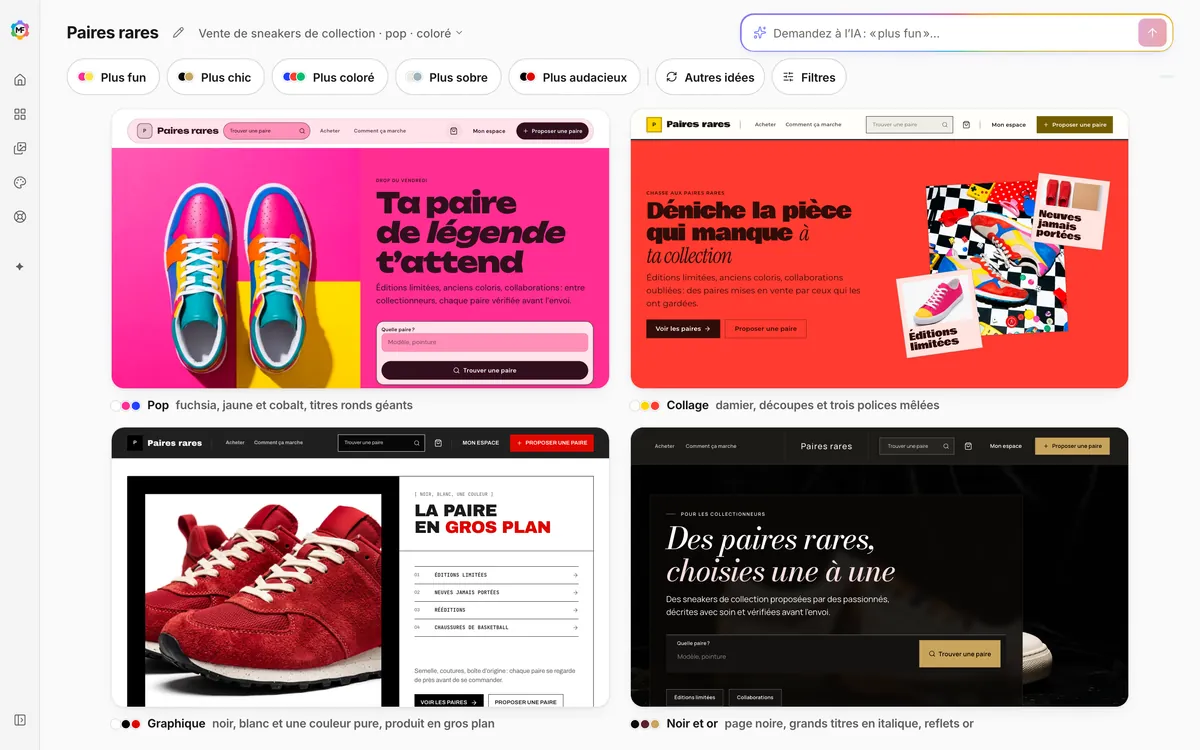
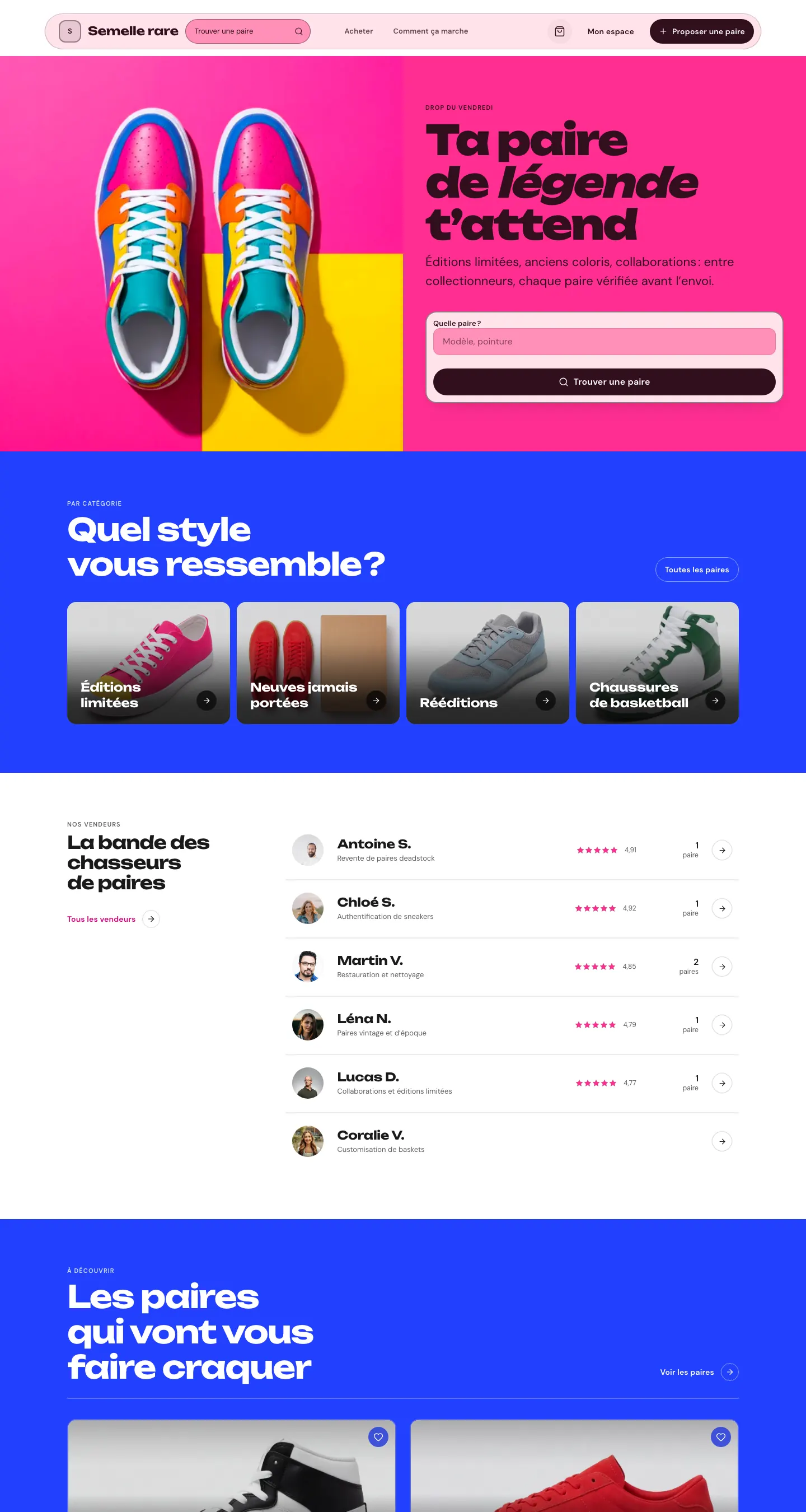
Building a website like Craigslist, or like Gumtree in the UK, is the dream of many founders: a place where the people of a city, a neighbourhood or a passion sell each other what they no longer need. The good news is that you do not have to take on a giant to succeed. You only have to do better than it on one precise patch. This guide explains what it takes to build a classifieds website that works: what it must do, how to protect your users from scams, how it makes money and what it costs, with prices read on 10 October 2026. With Marketplace Factory, one sentence is enough: six finished proposals arrive in about a minute, then your complete site, sample listings included, within a few minutes.
Why a niche, rather than another Craigslist
A general classifieds site lives on volume: it needs countless listings so that every visitor finds what they want near home. A newcomer will not win that race. It wins elsewhere, on depth: better-described listings, buyers who share something, trust that grows out of a community.
A few niches that hold up:
- An object: used road bikes, music gear, horse-riding equipment, baby gear.
- A community: the parents of a school, the students of a campus, the residents of an island.
- A trade: tools and leftover materials between builders, second-hand professional kitchen equipment.
- A city: everything for sale within twenty minutes of home, with the neighbourhood as a landmark.
A niche changes everything else. The filters become precise: frame size for a bike, the child’s age for baby gear. Listings resemble each other enough to be compared. The first sellers are found in places you already go. And your pages answer precise searches, such as “used road bike in Bristol”, where a dedicated page stands a real chance.
A test, taken from our guide on how to build a marketplace: can you list, in one evening, fifty people or places with something to sell, and a way to reach them? If so, your niche is precise enough to win.
What a classifieds website must do
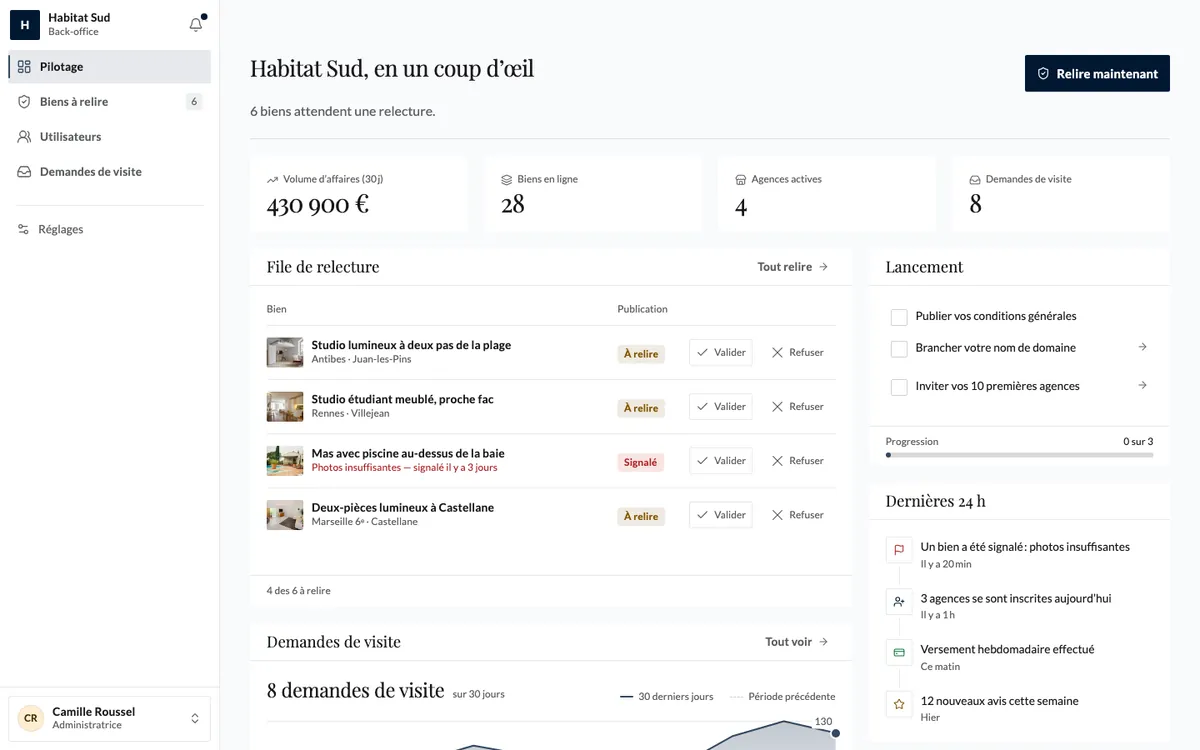
Six features make a classifieds site that works. All are included in a Marketplace Factory marketplace from the Launch plan, with the four spaces delivered together: the public site, the buyers’ area, the sellers’ area and the back office.
1. Guided posting
Posting a listing must be simple without being thin. Guided posting asks the questions your trade needs, requires the photos and saves the draft at every step. For classifieds, the catalogue model asks for the item’s condition, its defects, how it is handed over (in person, at a pickup point, by parcel), whether the price is negotiable, and the neighbourhood rather than the address. Each seller also says whether they sell as a private individual or as a trader.
2. Search and the neighbourhood
Visitors search by category, by price and by your trade’s criteria; the number of results updates live. Each listing shows its neighbourhood, with the name locals use, never the exact address: that is only shared in the message where seller and buyer arrange to meet.
3. On-site messaging
Every request has its own conversation, with photos and PDFs attached, up to five files of 5 MB. It is more than a comfort: it is your best defence against scammers, as we will see below.
4. Sales agreed by message
Between individuals, the sale is agreed by message, with no online payment: people meet, look at the item, pay on the spot. That is how classifieds work on a Marketplace Factory marketplace. If your items mostly travel by parcel, choose instead a marketplace where the buyer pays on the site: the money lands in your own Stripe account, and a one-of-a-kind item leaves the site as soon as it is paid, never sold twice. That model is detailed in our guide to building a website like Vinted.
5. Alerts and favourites
An alert sends an email as soon as a new listing matches a saved search; unsubscribing takes one click. With favourites, a heart on every listing, these are the two features that bring visitors back without spending a cent on advertising.
6. Legal pages, ready
Legal notice, privacy, terms of use, and terms of sale as soon as the site takes payments: they arrive ready, written for your country. Everything that is included, feature by feature, is on the Solutions page for selling goods.
Trust: scams and how to stop them
Sites where individuals sell to each other attract scammers. The US Federal Trade Commission describes one of the classics in its guide on how to spot, avoid and report fake check scams (June 2025): “People buying something from you online, ‘accidentally’ send a check for too much, and ask you to refund the balance. But that’s a scam.” Its advice is just as clear: “Don’t accept a check for more than the selling price.” Most such tricks share one move: getting the conversation, and the payment, away from the platform.
Your site can make good habits easy to follow:
| The risk | The counter | In a Marketplace Factory marketplace |
|---|---|---|
| The fake buyer who pulls the seller out of the messaging, then sends a payment link or an overpayment | keep conversations on the site | built-in messaging; contact details hidden in messages, a back-office setting |
| The fake listing: an item that does not exist, stolen photos | review before publishing, let people report | review before publishing, if you turn it on; “Report” on every page, with or without an account |
| The trader posing as a private seller | show who is selling | professionals declare their identity and their company registration is checked |
| Fake reviews | let only real buyers rate | verified reviews: only a customer who bought on the site can rate |
| The repeat offender | sanction | verification, sanctions and account suspension, in the back office |
Reviews are therefore born from purchases paid on the site. For classifieds settled face to face, trust rests first on messaging, review and reporting.
Showing who is selling is not only prudent, it is the law in the EU: since the Omnibus Directive (EU) 2019/2161, an online marketplace must tell consumers whether the third party offering an item is a trader or not, and that consumer rights do not apply to a purchase from a private individual.
The EU’s Digital Services Act also requires every platform to offer a way to report illegal content, and a statement of reasons when it removes a listing (Regulation (EU) 2022/2065, Articles 16 and 17). In the back office, every report arrives with the reasoned decision you have to give, and a listing can be approved, sent back for changes with a reason specific to your trade, or rejected. In the US, Section 230 says no provider of an interactive computer service shall be treated as the publisher of information provided by another; that shield does not extend to federal criminal law or intellectual property, so it is no reason to stop moderating. The rest of the framework is in our guide to marketplace legal requirements in the EU.
On tax, a site that only publishes listings may fall outside the reporting of sellers’ income: the DAC7 directive does not treat as a platform software that merely lets users list or advertise, “without any further intervention”, and the UK’s platform reporting rules follow the same logic. As soon as you take part in the sale, let alone in its payment, assume it applies to you, and have your case confirmed.
A last piece of advice: publish short, visible rules. What is forbidden, how a face-to-face hand-over works, what you do with a report. A community that knows the rules protects itself.
Making money with a classifieds site
On a classifieds site between individuals, most sales are paid on the spot: there is no commission to take. Sites that do well therefore charge for something other than the sale: visibility, and the service given to the most active sellers.
| Revenue source | How it works | Who pays |
|---|---|---|
| Paid listings | each published listing is paid for, if you decide so | regular sellers, professionals |
| Featured listings | a listing in the spotlight for a limited time, labelled as sponsored | sellers in a hurry |
| Subscriptions | a monthly plan to publish and stand out | thrift and consignment shops, stores, garages |
| Commission | a share of each sale paid online, from 0% to 50%, taken from what the seller receives | sellers of items that ship |
In a Marketplace Factory marketplace, these options are set in “Earn money from my sellers”, in the back office: seller subscriptions, pay-per-listing, paid featuring, pay-per-contact. A paid featured listing carries a sponsored label, and the “How listings are ranked” page tells visitors what a payment changes. These payments land in your Stripe account; your plan’s share applies to them as it does to a sale.
The right mix to start: free for individuals, paid for professionals and for visibility. It is the easiest model to get accepted while your audience grows. The full reasoning, with break-even points, is in our article on the marketplace business model.
What a website like Craigslist costs
Three routes, three orders of magnitude, read on 10 October 2026:
| Route | What it costs | What you get |
|---|---|---|
| Custom development | “typically north of $50,000” to build a marketplace from scratch, according to Sharetribe | your own software, to host and maintain |
| Software to configure | $199 a month billed yearly (Sharetribe Live); €129 a month for up to 100 sellers and 2,000 listings (Kreezalid Launch) | a generic marketplace, to set up |
| Marketplace Factory | €79 excl. VAT a month on Launch, plus 2% of what is paid online | the complete classifieds marketplace of your niche |
When you compare quotes or plans, ask what they include: hosting, maintenance, moderation tools, emails, legal pages, and the limits on sellers and listings. For a classifieds site, where listings pile up fast, a cap on listings weighs as much as the monthly price.
With Marketplace Factory, the sum changes nature. The studio is free to try: 2 ideas and 10 edits are free when you sign up, no card needed. To open, Launch costs €79 excl. VAT a month, or €790 a year, plus 2% of what your customers pay online. A sale agreed by message and paid on the spot does not count: a site where everything is settled face to face costs you €79 excl. VAT a month, hosted, maintained and backed up every day.
| Paid online on your site, per month | €0 | €1,000 | €5,000 | €10,000 |
|---|---|---|---|---|
| Marketplace Factory Launch, €79 + 2% | €79 | €99 | €179 | €279 |
| Marketplace Factory Pro, €199 + 1.5% | €199 | €214 | €274 | €349 |
Amounts exclude VAT and payment fees: Stripe charges 1.5% + €0.25 per payment with a standard European card from a euro-area account, according to its price list, or 2.9% + 30¢ per domestic card from a US account, and, to pay sellers their share, depending on the Connect option chosen, up to €2 per active seller per month plus 0.25% + €0.10 per payout, according to Stripe Connect pricing. Pro adds your domain names (up to three), your emails sent from your domain and ten administrators instead of two; above about €24,000 paid online a month, it costs less than Launch. During the beta, you try everything without paying a thing: payments run in test mode. Plans are detailed on the pricing page.
Getting found, then coming back
A classifieds site lives on the long tail: every listing is a page, answering a precise search. Those are the pages Google can show to people searching precisely. Every Marketplace Factory marketplace arrives ready for that: sitemap, structured data and a share image on every page. The rest is explained in our guide to marketplace SEO.
Three habits do the rest:
- Titles that say everything: the item, its condition, the city. Guided posting already asks the right questions.
- Categories named the way people search: “cargo bikes” rather than “soft mobility”.
- Reasons to come back: search alerts and favourites bring visitors back, and more than a hundred emails, already written, go out at the right moment.
The first visitors will mostly come from the places of your niche: a parents’ association, a club, a neighbourhood group, a partner shop. The method to gather the first sellers, then the first buyers, is in our article on the marketplace chicken and egg problem.
Your first month, step by step
- Day one: write your sentence, choose among six proposals in contrasting styles, refine with a word by asking the AI, or by hand in the editor.
- The first week: in the back office, turn on review before publishing and hidden contact details in messages; write your hand-over rules and what is forbidden.
- Weeks two and three: gather a hundred listings with your first fifty sellers, in person or on the phone.
- Week four: open on Launch, at your .marketplacefactory.app address. Track three numbers every week: listings published, messages sent, sellers who come back to post.
- Then: featured listings and professional subscriptions once the audience is there, and your own domain name with Pro.
A website like Craigslist, at your scale, is no longer a months-long project. With Marketplace Factory, the complete marketplace of your niche comes out of one sentence, without a line of code: guided posting, messaging, alerts, moderation and online payments included. Your energy goes to what makes a classifieds site live: your first sellers, and the trust of your community.
Craigslist and Gumtree are trademarks of their respective owners; Marketplace Factory is not affiliated with them.
Frequently asked questions
How much does a website like Craigslist cost?
Sharetribe puts building a marketplace from scratch at typically north of $50,000; software to configure costs $199 a month billed yearly (Sharetribe Live) or €129 a month (Kreezalid Launch, up to 100 sellers and 2,000 listings), prices read on 10 October 2026. With Marketplace Factory, Launch costs €79 excl. VAT a month, hosting included, plus 2% of what is paid online: a sale settled face to face does not count.
Does a classifieds site need online payments?
No. Between individuals, the sale is agreed by message and paid on the spot, at hand-over: that is how classifieds work on a Marketplace Factory marketplace. If your items mostly travel by parcel, choose a marketplace where the buyer pays on the site: online payment is included from Launch, on your own Stripe account.
How do I prevent scams on a classifieds site?
Keep conversations in your messaging: a scammer’s first move is to pull the victim out of it. Hide contact details in messages, review listings before they go live, let people report every page, show who is private and who is a trader, and let only real buyers leave reviews. On a Marketplace Factory marketplace, review and hidden contact details are back-office settings; reporting and verified reviews are already there.
How does a classifieds site make money?
Mostly from sellers: paid listings, featured listings labelled as sponsored, subscriptions for professionals, then a commission on sales paid online. Free for individuals, paid for visibility and for professionals: that is the easiest model to get accepted at launch. At Marketplace Factory, these options are switched on in your back office.
Do I need a company to launch a classifieds site?
Not to try it: the Marketplace Factory studio gives you 2 ideas and 10 edits when you sign up, no card needed. To open to the public, you need a registered business, because you become a platform operator: telling buyers whether a seller is a trader, handling reports and, as soon as you take part in sales, tax reporting of sellers’ income in the EU and the UK. An accountant can help you choose a structure.
Sources12
The pages cited in this article, checked on the date given in the text.
- consumer.ftc.gov/articles/how-spot-avoid-and-report-fake-check-scams
- eur-lex.europa.eu/legal-content/EN/TXT/?uri=CELEX:32019L2161
- eur-lex.europa.eu/legal-content/EN/TXT/?uri=CELEX:32022R2065
- eur-lex.europa.eu/legal-content/EN/TXT/?uri=CELEX:32021L0514
- gov.uk/guidance/reporting-rules-for-digital-platforms
- law.cornell.edu/uscode/text/47/230
- sharetribe.com/academy/how-much-does-it-cost-to-start-a-marketplace-business
- sharetribe.com/pricing
- kreezalid.com/pricing
- stripe.com/ie/pricing
- stripe.com/ie/connect/pricing
- stripe.com/pricing
These articles are written by the Marketplace Factory team, who build the studio and the marketplaces it generates. How we write